





Choosing work gloves for small parts requires a repeatable handling trial, not a promise that a thin-looking glove will feel precise. A buyer comparing gloves for fasteners needs to know which parts were handled, what errors occurred and whether the result belongs to the exact model and size offered.
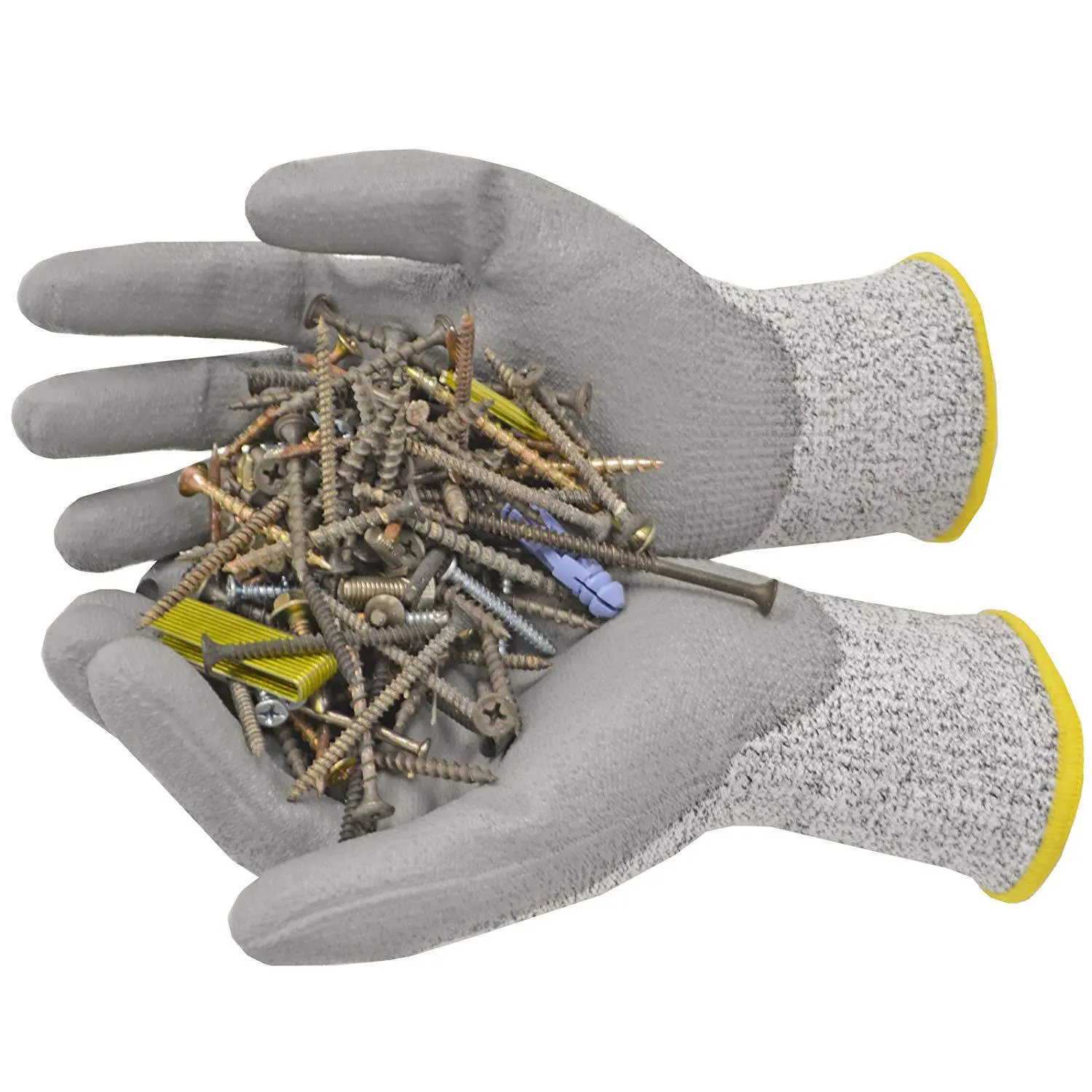
This guide helps importers, distributors and purchasing teams build that record for picking up, orienting and placing small fasteners. It complements a general glove specification review with a practical observation sheet. The examples are hypothetical; they are not Rilong test results or customer case studies.
1. Define the fastener task before selecting samples
Describe the complete manual sequence. Picking a washer from a tray, turning a nut to the correct orientation and placing a screw into a fixture are different actions. A candidate can feel comfortable while still causing repeated regripping at one step. Identify that step instead of rating the entire operation simply “good dexterity.”
Record the part designation, relevant dimensions, shape, finish and as-presented condition. Include the tray, bin, fixture and any hand tools. If several fasteners are used, identify which ones represent the purchasing requirement. Do not use a larger, easier demonstration part and assume that its result covers the smallest part on the line.
For example, a proposed trial could follow one identified washer from its normal compartment to an approved placement fixture. That description is more reproducible than “pick up small items.” Do not invent a dimensional threshold: obtain the actual component information from the customer or workstation owner.
2. Separate permitted handling from protection approval
Have the responsible workplace reviewer decide whether and how a trial may be conducted. A controlled handling exercise cannot establish that a glove protects against sharp edges, chemicals, heat or another exposure. Do not use an unapproved workplace hazard as a convenient way to test a sample.
Keep the handling record separate from the model-specific protection review. If parts are oily, coated, burred or otherwise different from the approved exercise, record the difference and refer it to the responsible reviewer. A successful clean-part trial does not approve a different surface condition.
Likewise, do not assume that gloves are appropriate around every machine or moving assembly. The site must determine permitted work practices and glove use. This purchasing workflow concerns an authorized manual exercise; it does not replace task instructions or a hazard assessment.
3. Identify the exact glove, size and construction
Give each candidate a sample reference linked to the supplier model, size marking, specification revision and received condition. Record the wearer’s chosen size and whether the glove was new or previously used. A result for one size should not silently become an approval for every size ordered.
Rilong’s PU-palm-coated work glove model is one construction buyers can ask to evaluate. Its page lists a 13-gauge anti-cut liner and PU palm coating. Obtain the current specification and confirm that the physical sample matches the offered version before entering it in a comparison.
The page’s “LEVEL 5” wording remains a model-page claim that needs its corresponding report and test method. It must not be converted into an EN or ANSI classification from the wording alone. Neither this article nor a product photograph verifies the claim or establishes suitability for the fastener task.
The broader PU-coated glove fit, coverage and evidence checklist covers the complete sourcing decision. Use the narrower trial below to document how an already-identified sample behaves during a defined sequence.
4. Use comparable conditions without inventing a test standard
Write the exercise before comparing candidates. Keep the component presentation, work surface, fixture, sequence and observation method consistent. Record familiarization and the order in which candidates are tried. If conditions change, identify the affected observations instead of presenting all results as directly comparable.
Let the workplace set an appropriate task, observation period and stopping rules. This guide does not prescribe a number of repetitions, a pass rate or a dexterity score. A buyer’s exercise is not a standardized laboratory test merely because it uses a timer or repeated actions.
Also record changes outside the glove. A different tray depth, a relocated parts bin or a modified fixture can change the handling sequence. If one candidate benefits from that change, either repeat the comparison under agreed conditions or limit the conclusion to what was actually observed.
5. Record errors at the step where they occur
Use separate observations for pickup, orientation, placement and release. Count only events defined in advance, and keep counts connected to the recorded amount of work. “Two drops” without knowing which exercise was observed cannot fairly compare candidates.
| Step | Observation to record | Useful context |
|---|---|---|
| Pickup | Failed pickup attempts or more than one part picked unintentionally | Part position, tray and fingertip contact |
| Orientation | Regripping, part rotation difficulty or loss of control | Which face or direction must be presented |
| Placement | Dropped parts, missed location or assistance needed | Fixture identity and permitted placement method |
| Release | Part remains with the glove or moves after release | Contact area and observed surface condition |
| Glove adjustment | Wearer repeatedly pulls fingertips or repositions the glove | Size, finger fit and point in the sequence |
| Sample condition | Visible coating or yarn changes during the exercise | Sample reference and when the change was noticed |
Separate observation from explanation. “The washer moved when the finger lifted” records an event. “The coating formulation is wrong” asserts a cause that the exercise has not established. Photographs or video, where authorized, should show the relevant sequence and sample identity without exposing confidential customer information.
6. Compare wearer feedback with the observation record
Ask where the wearer needed extra effort, lost a sense of the part or adjusted the glove. Connect comments to an action. “Hard to turn the nut after pickup” is more useful than “uncomfortable,” because purchasing can ask whether the issue relates to size, shape, coating coverage or another point needing investigation.
Do not average away a recurring problem simply because another wearer liked the glove. Compare the fit and task records for the people included, and state the limits of that group. A short observation does not establish full-shift comfort, long-term wear life or productivity improvement.
If finished components have separate cleanliness requirements, review them separately. The work glove lint and visible-fiber guide explains why a clean-looking photograph is not proof of low shedding. A precise placement result does not establish non-marking, silicone-free or cleanroom suitability.
7. Turn the result into a purchasing decision
Close the trial with a scoped decision: the candidate, size, task and conditions reviewed; the observations supporting it; unresolved questions; and the person authorized to approve the next step. Keep protection evidence, handling feedback, component-quality requirements and commercial terms in separate fields.
If a different size or construction is proposed to address a problem, identify it as a new candidate. Retain the original record and compare the changed version under agreed conditions. Do not overwrite the original failure or assume that a thinner liner, different coating or higher gauge will resolve it.
For an RFQ, send the supplier a concise task description, sample identification requirements and requested size set. Ask which construction is being offered and what current documentation is available. Confirm MOQ, packaging and lead time in the quotation rather than inserting catalogue assumptions into the approval record.
Buyer questions about small-fastener glove trials
Can a faster result alone determine the winning glove?
No. Consider the defined errors, fit feedback, component requirements and mandatory protection evidence separately. A timed exercise only describes the recorded sequence and conditions; it does not establish a general productivity benefit.
Should one worker test every ordered size?
A result should describe the size actually worn and the person’s fit feedback. Plan the size review around the intended workforce. Do not approve an entire size range from a single wearer’s preferred pair.
What if the supplier sends a similar-looking replacement?
Ask for its exact identity and construction differences. Keep it outside the original approval until the required review is completed. Similar appearance does not establish equivalent handling or protection.
A useful small-parts glove trial connects a specific sample to a reproducible manual task and an honest record of errors and limitations. To discuss candidate samples, send Rilong the fastener task, glove sizes and documentation requirements. Agree what must be demonstrated before turning a sample into a bulk-order approval.
