




Choosing work gloves for oily parts takes more than reading “excellent grip” in a catalogue. A buyer needs to know which glove configuration was supplied, what was handled and whether the result is relevant to the intended task. A sample that feels comfortable while holding a clean component has not answered the purchasing question for a component carrying production lubricant.
This checklist helps importers, distributors and procurement teams structure a documented handling trial before a bulk order. It is a purchasing framework, not a chemical-protection assessment or a substitute for a workplace risk assessment. Keep the evidence for handling, mechanical protection and chemical exposure separate.
Define the handling problem before choosing the coating
Start with one specific operation. “Automotive work” is too broad: transferring finished components between trays, picking small fasteners and moving unfinished sheet metal present different requirements. Describe the part, surface finish, contamination, required movements and the consequences of losing control. Ask the responsible workplace safety manager to confirm whether a trial is appropriate and which protective requirements apply.
The purchasing brief should identify the actual lubricant or process fluid by product name and revision where available. Obtain its current safety data sheet and the workplace exposure assessment through the responsible team. Avoid describing every fluid as simply “oil.” Do not assume that a nitrile-coated general handling glove is suitable for chemical contact because its coating material is named nitrile.
- What part is handled, and which surfaces are touched?
- Is the work dry, intermittently contaminated or continuously exposed?
- Does the task require fingertip placement, a broad palm grip or both?
- Are there sharp edges, heat, moving equipment or other hazards requiring separate assessment?
- Who has authority to approve the trial and stop it?
Freeze the exact sample configuration
A meaningful comparison starts with traceable samples. Record the supplier reference, sample date, size, liner description, coating texture and coverage. Photograph the palm, back, fingertips and cuff. If the supplier offers several constructions under one product family, give each configuration a separate trial record.
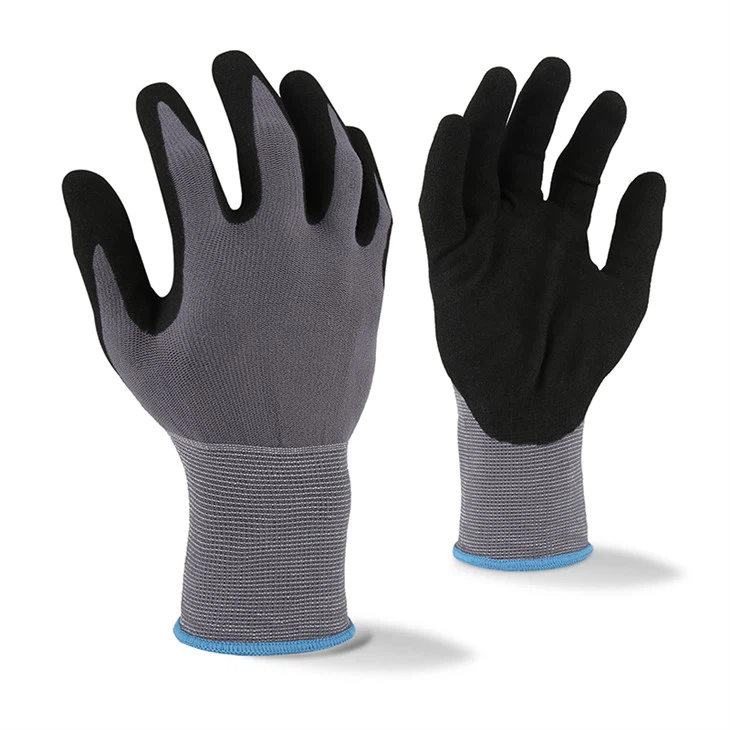
Rilong’s 15-gauge sandy nitrile palm-coated work glove is a relevant product to discuss when preparing this type of sample request. The confirmed gauge is 15. Confirm the offered liner blend and palm or full-coating configuration in writing before approval; do not treat all options mentioned on a product page as one identical specification. The page alone does not establish suitability for a particular fluid or provide a model-specific chemical-protection rating.
For the initial supplier request, use the complementary 15-gauge sandy nitrile sample and RFQ checklist. Then use the handling record below to evaluate the samples received. Keeping these steps distinct makes it easier to see whether a problem comes from the specification, sample identity or task conditions.
Compare like-for-like under an approved trial plan
Set the conditions before the trial begins
The workplace team should define an approved, controlled method that represents the intended task without introducing unassessed exposure. This article does not prescribe contaminant quantities, loads, machinery operation or contact times. Those choices belong to the competent people responsible for the actual workplace.
Use the same defined part type, permitted handling sequence and observation categories for each candidate. Record material differences rather than trying to correct them from memory later. If one sample is evaluated on clean parts and another on heavily contaminated parts, the results cannot support a simple supplier ranking.
Include the current approved glove as a reference where the workplace permits. A dry reference condition can also help distinguish a general fit or dexterity problem from a condition-specific handling problem. Neither comparison establishes a standardized test level. Describe it as an internal evaluation for the recorded operation.
Record fit before interpreting grip
Check that each wearer has the intended size and can complete the approved movements comfortably. Record loose fingertips, excessive tension, cuff movement or difficulty placing small parts. A poorly fitting sample may alter handling even when its coating looks similar to another sample.
Do not use a single wearer’s size preference as the size specification for the whole order. Keep individual fit observations in the trial sheet, then consolidate the procurement findings without identifying workers unnecessarily. If the task needs several sizes, document which sizes were actually evaluated and which remain unverified.
Use an observation sheet that purchasing can act on
Replace “good grip” with observations linked to the defined task. The aim is to create a record a second buyer can understand, not to generate a scientific rating from informal impressions.
| Record field | What to capture | Purchasing use |
|---|---|---|
| Sample identity | Reference, batch if provided, size and photos | Connect findings to the offered configuration |
| Task conditions | Part, surface, named fluid and approved method | Define the limits of the comparison |
| Handling observations | Repositioning, difficulty placing parts or loss of control | Identify issues requiring review |
| Fit and movement | Fingertip fit, cuff movement and restricted motion | Separate sizing from coating questions |
| Condition at inspection | Visible damage, contamination and changes in appearance | Trigger follow-up under the workplace procedure |
| Decision | Approved scope, unresolved questions and reviewer | Prevent an unrestricted purchasing approval |
Agree on the observations that matter before seeing which supplier performs best. Record unfavorable results and interruptions as carefully as positive comments. A trial stopped under the workplace’s stop criteria is a finding requiring review, not missing data to replace with a favorable assumption.
Separate handling feedback from protection evidence
A useful handling trial does not prove chemical resistance, cut resistance, abrasion performance or electrical protection. Request the documentation relevant to the exact offered model and the required claims. Match product references, construction, report scope and any applicable instructions rather than accepting a report for an unspecified glove family.
Similarly, an intact appearance after a short trial cannot establish a safe replacement interval. Follow the manufacturer’s instructions and the workplace’s approved inspection and replacement rules. Do not extend use, wash contaminated samples or propose reuse simply to improve an estimated cost per pair.
If the required documentation is absent or cannot be matched to the model, leave the associated approval unresolved. Procurement can continue gathering information, but should not turn “supplier to confirm” into a verified claim in a quotation, product listing or customer presentation.
Turn the findings into a conditional purchasing decision
Summarize the result for the task actually evaluated. A useful approval statement identifies the sample reference and size range reviewed, the operation and conditions, the people who approved it and any remaining limits. Avoid a conclusion such as “suitable for all oily work.”
Send the supplier a consolidated question list. For example: confirm the sampled liner composition; confirm coating coverage; identify the production reference that matches the sample; provide the relevant model documentation; and explain how changes to the approved construction will be communicated. Request separate confirmation of commercial terms instead of inferring them from sample availability.
Retain an approved reference sample where practical and permitted by your quality procedure. Establish how incoming goods will be compared with it, including labeling, size identification, visible construction and agreed documentation. A reference sample supports consistency checks; it is not evidence that every production unit has undergone performance testing.
Keep the approval useful after the first order
Review the evaluation when the component, lubricant, task, glove construction or supplier reference changes. Record complaints against the relevant batch and operation so the next investigation starts with facts. If a distributor sells the glove into several industries, preserve the distinction between one customer’s task feedback and claims intended for the whole market.
The strongest purchasing decision is traceable: a defined need, an identifiable sample, an approved evaluation and a clear evidence boundary. It helps teams shortlist work gloves for oily parts without turning a subjective handling impression into a protection guarantee.
To discuss the Rilong 15-gauge sandy nitrile model, send your sample and specification enquiry with the intended operation, required sizes, coating coverage and documentation requirements. Liner details, model evidence, packaging and commercial terms should be confirmed for the actual offer before ordering.
