





The Foundational Importance of Hand Safety in the Workplace
The statistical evidence surrounding workplace injuries is unambiguous: the hands are the most frequently injured body part, second only to the back. These injuries carry staggering direct and indirect costs, including medical expenses, lost work time, increased insurance premiums, and diminished productivity. Yet, a significant majority of these incidents are preventable through the correct use of properly specified hand protection. An investment in a high-quality hand protection program, therefore, is a direct investment in a company’s financial health and its most valuable resource—its people. A superior glove does more than just prevent injury; it enhances a worker’s ability to perform their job with confidence and efficiency. A glove with the right grip can prevent a costly dropped part, while a glove with superior dexterity can increase assembly line speed. In this context, the role of a premier manufacturer like Shandong Rilong, committed to quality and innovation since 2005, becomes that of a strategic partner in mitigating risk and enhancing operational excellence.
A Comprehensive Guide to Work Glove Materials
The performance, comfort, and protective capabilities of any work glove are determined first and foremost by its base materials and any subsequent coatings. Each material offers a unique profile of strengths and weaknesses, making it suitable for a specific range of applications. Understanding these core properties is the first step in making an informed selection.
Nitrile Gloves: The Synthetic Standard for Versatility and Performance
Nitrile Butadiene Rubber (NBR) has become the dominant synthetic polymer in the glove industry, and for good reason. It offers an exceptional balance of chemical resistance, durability, and comfort, making it a reliable choice for an incredibly broad range of industrial and medical tasks.
- Superior Chemical and Oil Resistance: The acrylonitrile component in the polymer’s structure gives nitrile work gloves their hallmark resistance to oils, fuels, petroleum-based solvents, and many acids. This makes them the default choice for automotive applications, where nitrile mechanics gloves provide an essential barrier against grease and brake fluid.
- Exceptional Durability: Nitrile is a physically robust material, offering significantly higher puncture and abrasion resistance than natural rubber latex. This toughness is crucial in environments where hands are exposed to rough or sharp components. A key safety feature is that nitrile tears when punctured, providing an immediate and obvious visual indication that the barrier has been breached.
- Hypoallergenic Solution: As a 100% synthetic material, nitrile contains none of the natural proteins that cause Type I latex allergies. This critical safety feature has made nitrile the standard in healthcare and has driven its adoption in industries where worker allergies are a concern.
- Technological Advancements: Modern nitrile formulations have largely overcome the stiffness of earlier versions. New “soft nitrile” technologies mimic the comfort and flexibility of latex, reducing hand fatigue. This innovation is evident in both disposable gloves, like the popular black nitrile gloves, and in reusable coated gloves.
Latex Gloves: The Benchmark for Dexterity and Elasticity
Derived from the sap of the rubber tree, natural rubber latex has been a staple of the glove industry for over a century. Its defining characteristic is its incredible elasticity, which allows it to provide a snug, comfortable fit that is often described as a “second skin.”
- Unmatched Fit and Comfort: The molecular structure of latex allows it to stretch and conform perfectly to the hand, providing a level of dexterity and tactile sensitivity that synthetics have long strived to replicate. This makes latex gloves an excellent choice for tasks requiring fine motor control.
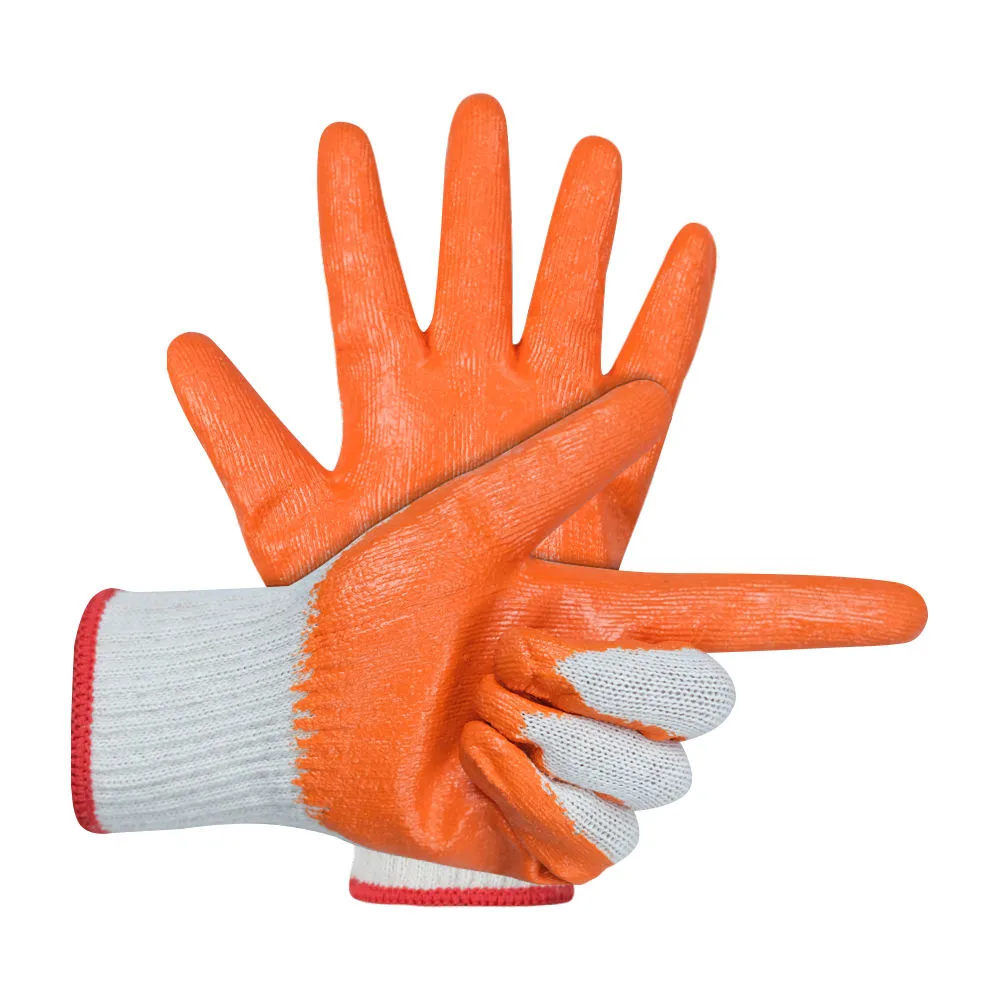
- Superior Grip in Wet and Dry Conditions: Natural rubber possesses a high coefficient of friction. When applied as a coating with a “crinkle” finish, as seen on many latex coated construction gloves, it creates a surface that channels away water, providing an outstanding grip on wet or smooth objects.
- Cost-Effectiveness: For general-purpose applications where high chemical resistance is not required and allergies are not a concern, latex often provides a very cost-effective solution.
- The Allergen Caveat: The presence of natural proteins means that latex can cause serious allergic reactions in sensitized individuals. This risk has led to a significant decline in its use in medical environments but it remains a viable and popular choice for many industrial and household applications, such as in dishwashing gloves.
Leather Work Gloves: The Icon of Durability and Thermal Resistance
For generations, leather has been the material of choice for the toughest jobs. Its natural, complex fiber structure provides a level of ruggedness and durability that is difficult to achieve with synthetic materials alone.
- Extreme Abrasion Resistance: The dense, interlocking fibers of leather make it exceptionally resistant to wear and tear from friction. This is why leather work gloves are a fixture on construction sites and in any application involving the handling of rough materials like stone, wood, or metal.
- Natural Heat Resistance: Unlike thermoplastic polymers, leather does not melt when exposed to sparks or high heat. It will char and shrink, but it provides a reliable thermal barrier, making it the essential material for all types of welding gloves.
- Breathability and Comfort: As a natural hide, leather is breathable, allowing some moisture vapor to escape. Over time, a quality leather glove will mold to the shape of the wearer’s hand, creating a custom and comfortable fit. Different types of leather, such as supple goatskin or tough cowhide, offer different balances of dexterity and durability.
Coated Gloves (PU & PVC): The Modern Generalists
The largest category of modern industrial gloves involves a seamless knit liner coated with a protective polymer. This hybrid construction offers a superb combination of ergonomic comfort and specialized protection.
- Polyurethane (PU): PU is an incredibly versatile polymer used to create a very thin, lightweight, and dextrous coating. PU coated gloves are the standard for precision work, offering excellent tactile sensitivity, high abrasion resistance for their weight, and a clean, non-sticky grip. They are the ideal choice for electronics assembly, quality inspection, and small parts handling.
- Polyvinyl Chloride (PVC): PVC is a low-cost, highly durable synthetic plastic. As a glove coating, it offers excellent resistance to abrasion as well as to many acids, bases, and alcohols. Fully coated PVC safety work gloves provide a robust waterproof and chemical-resistant barrier. Alternatively, simple knit gloves can be enhanced with PVC dots to provide an economical grip enhancement for dry manual handling tasks.
Application-Specific Hand Protection: Matching the Glove to the Hazard
A “general purpose” glove can be a dangerous compromise. True safety is achieved by selecting a glove specifically engineered to combat the primary hazards of a given application. A specialized manufacturer’s portfolio will reflect this principle, offering a range of purpose-built solutions.
Cut Resistant Gloves: Protection from Sharp Edges
For any worker handling glass, sheet metal, blades, or sharp-edged components, a certified cut-resistant glove is non-negotiable. These are not simply “thick” gloves; they are made from technologically advanced yarns with extremely high tensile strength.
- Key Materials: High-Performance Polyethylene (HPPE) is the most common, offering excellent cut resistance in a lightweight, flexible, and cool-feeling fiber. Aramid fibers provide the added benefit of heat resistance. The highest levels of protection are achieved with composite yarns that blend these fibers with micro-filaments of steel or fiberglass.
- The Importance of Standards: The level of protection is quantified by the ANSI/ISEA 105 (A1-A9) or EN 388 (A-F) standards. It is critical to select a glove with a certified rating that corresponds to the level of risk. For moderate risks, a glove like the Level 5 cut resistant glove (an older rating system, now roughly equivalent to ANSI A4/A5) might be appropriate, while more extreme risks demand higher-rated gloves.
Welding Gloves: Resisting Extreme Heat and Spatter
Welding generates a unique combination of intense heat, molten metal spatter, and powerful UV radiation. Only gloves specifically designed for this purpose are acceptable.
- Key Materials: Leather welding gloves are the industry standard due to leather’s natural heat resistance and durability. They are stitched with flame-resistant Kevlar® thread to prevent seam failure.
- Process-Specific Designs: The choice of glove depends on the welding process. High-spatter processes like Stick and MIG welding require thick, heavily-lined cowhide gloves (MIG gloves). Precision processes like TIG welding, which require fine motor control of a filler rod, demand a much thinner, more dextrous glove made from supple goatskin or deerskin (TIG gloves).
Heavy Duty Gloves: For the Toughest Jobs
For the most demanding physical tasks in construction, demolition, and resource industries, a glove must be built for maximum durability and protection against a range of severe mechanical risks.
- Defining Features: A heavy-duty glove is characterized by robust construction. This can include thick, reinforced leather palms, multi-layer coatings, and the addition of impact-absorbing TPR armor on the back of the hand. The focus is on longevity and preventing severe injuries from crushing, abrasion, and puncture. Examples include the heavy-duty rubber glove for wet, abrasive work.
Winter Work Gloves: Combating Cold Stress
Working in cold environments introduces the risk of frostbite and a dangerous loss of dexterity. Winter work gloves are engineered systems designed to keep hands warm and dry.
- Key Technology: The most common design features a thermal liner, often a soft, brushed acrylic, which traps air to provide insulation. This liner is then coated with a waterproof polymer like latex. A latex coated waterproof winter glove is highly effective because the latex remains flexible at low temperatures while providing a 100% waterproof barrier and excellent grip.
The Critical Role of Proper Fit, Sizing, and Ergonomics
A glove’s protective features are rendered useless if it does not fit correctly. An ill-fitting glove is not just uncomfortable; it is a safety hazard. A glove that is too large can reduce dexterity, create folds that cause blisters, and get caught in machinery. A glove that is too small can restrict circulation and cause muscle fatigue.
How to Ensure a Proper Fit
- Provide a Full Size Range: A responsible hand protection program must offer a full range of sizes to accommodate the entire workforce.
- Educate on Sizing: Employees should be taught how to measure their glove size correctly—typically by measuring the circumference of their hand around the knuckles—and how to read a manufacturer’s sizing chart.
- Consider Gender-Specific Designs: Recognizing the anatomical differences between male and female hands, many manufacturers now offer specific lines for women. These women’s gloves are not just smaller; they are patterned to be narrower with more slender fingers, providing a far superior ergonomic fit.
Partnering with a Specialist Manufacturer: A Strategic Advantage for Businesses
For any organization that relies on hand protection, the choice of a supplier is a strategic decision. Partnering directly with a specialized and vertically integrated manufacturer like Shandong Rilong offers significant advantages over sourcing from generalist distributors.
The Power of OEM & ODM Services
A true manufacturing partner can offer Original Equipment Manufacturer (OEM) and Original Design Manufacturer (ODM) services. This allows a business to move beyond standard, off-the-shelf products and create hand protection solutions tailored to their specific needs. Whether it’s modifying an existing design with a different color or cuff (ODM) or creating an entirely new, proprietary glove design (OEM), this level of customization ensures a perfect match between the glove and the application. It also allows for custom branding, reinforcing the company’s commitment to safety.
The Guarantee of Quality and Compliance
When you partner with a manufacturer, you have a direct line of sight into their quality control processes. A reputable manufacturer will have a robust quality management system and will be transparent about their testing and certifications. Their commitment to meeting international standards like EN 388 and EN 420 is not just a marketing claim; it is a verifiable guarantee of the product’s protective capabilities. This direct relationship ensures a level of consistency and reliability that is difficult to achieve when sourcing through a chain of middlemen.
Supply Chain Reliability
A direct manufacturing partnership creates a more resilient and efficient supply chain. By eliminating intermediaries, communication is clearer, lead times are often shorter, and there is a greater ability to manage inventory and scale production to meet demand. For the over 200 major clients who trust Rilong, this direct relationship is a key component of their operational stability.
Conclusion: A Strategic and Data-Driven Approach to Hand Safety
The selection of work gloves has evolved into a sophisticated science. A successful hand protection program is no longer about simply providing any glove; it is about providing the *right* glove. This requires a methodical, hazard-based approach that begins with a detailed risk assessment and ends with the selection of a product whose material, design, and certified performance ratings are precisely aligned with the demands of the task. It requires an understanding of the nuanced differences between materials like nitrile, latex, and leather, and an appreciation for the specific technologies engineered to combat risks like cuts, impacts, and cold. Furthermore, it demands a focus on the human factor—ensuring a proper ergonomic fit for every worker. By embracing this strategic, data-driven approach and by partnering with an expert manufacturer committed to quality and innovation, any organization can elevate its hand safety program from a simple compliance measure to a powerful tool that protects its workers, enhances productivity, and secures its operational success.
