








Stage 1: Design and Material Sourcing – The Blueprint for Protection
The lifecycle of any great product begins with a purpose-driven design and the selection of high-quality raw materials. This initial stage is the blueprint that dictates the glove’s future capabilities and limitations. It is here that the intended application, the identified hazards, and the desired ergonomic properties converge.
Conceptual Design and Ergonomics
The design process starts not on the factory floor, but with a deep analysis of the end-user’s needs. Glove designers and engineers consider questions such as:
- What are the primary hazards? Is the glove intended to protect against cuts, chemicals, heat, or a combination of risks?
- What is the primary task? Does it require fine motor skills (like electronics assembly) or gross motor skills (like heavy construction)?
- Who is the user? The anatomical needs for men’s, women’s, and children’s hands are different and must be considered.
This analysis informs the choice of a base pattern, the required material thickness, the type of wrist closure, and the overall ergonomic shape of the glove. The goal is to create a design that offers maximum protection with minimal encumbrance.
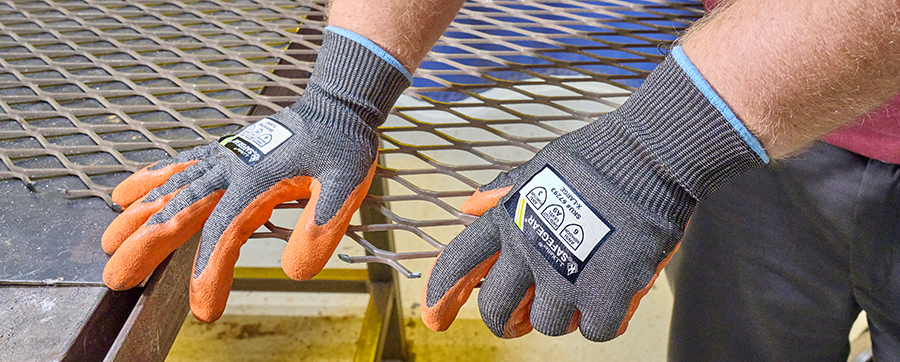
Sourcing of Raw Materials
The quality of the final product is inextricably linked to the quality of its constituent parts. A reputable manufacturer places immense importance on sourcing premium raw materials.
- Polymers for Coatings and Disposable Gloves: For nitrile gloves, this involves sourcing high-grade Nitrile Butadiene Rubber (NBR) latex from chemical suppliers. For latex gloves, it involves sourcing high-quality, low-protein natural rubber latex from certified plantations. The purity and consistency of these polymer emulsions are critical for the final glove’s strength and barrier integrity.
- High-Performance Yarns: For cut-resistant gloves, the supply chain for high-performance yarns like HPPE (High-Performance Polyethylene) and aramid fibers is crucial. Manufacturers partner with specialized textile engineering firms to procure yarns that meet precise specifications for tensile strength and denier (a measure of fiber thickness).
- Leather Hides: For leather welding gloves and other heavy-duty leather products, the process involves sourcing and grading animal hides. The type of animal (cow, goat, deer), the part of the hide (split or grain), and the tanning process all have a significant impact on the final glove’s durability, flexibility, and heat resistance.
Traceability and quality control at the material sourcing stage are the first and most critical steps in building a reliable and effective glove.
Stage 2: The Manufacturing Process – From Raw Material to Finished Product
This is the heart of the glove’s creation, where raw materials are transformed into a functional piece of PPE through a series of technologically advanced processes. The precision and control exerted during this stage are what separate a high-quality manufacturer from the rest.
Seamless Liner Knitting
For most modern coated industrial gloves, the process begins with the knitting of the seamless liner.
- Automated Knitting Machines: These sophisticated machines use hundreds of needles to knit a complete glove liner from a single continuous thread of yarn (nylon, polyester, HPPE, etc.). The process is fast, efficient, and results in a liner with no seams in the working areas, which eliminates points of friction and potential failure.
- The Importance of Gauge: The “gauge” of the machine refers to the number of needles per inch. A higher gauge, like 18-gauge, uses finer needles packed closely together to produce a very thin, lightweight, and form-fitting liner, ideal for tasks requiring high dexterity. A lower gauge, like 10- or 7-gauge, uses thicker needles to produce a heavier, more cushioned liner for general-purpose work.
The Automated Dipping and Coating Process
Once the liners are knitted, they move to the dipping line to receive their protective polymer coating.
- Loading: The textile liners are carefully fitted onto ceramic hand-formers.
- Washing and Leaching: The formers move through a series of cleaning tanks to remove any impurities from the knitting process, ensuring a clean surface for the coating to adhere to.
- Coagulant Dip: The formers are dipped into a coagulant solution. This is a crucial step that causes the liquid polymer in the next stage to solidify onto the liner in a controlled manner.
- Polymer Dip: The formers are then dipped into a large vat containing the liquid polymer solution (nitrile, latex, PU, or PVC). The depth, angle, and duration of this dip are precisely controlled by robotic arms to ensure a consistent coating thickness and a clean, uniform finish. This is where a latex palm coated glove or a nitrile palm coated glove gets its characteristic appearance.
- Curing (Vulcanization): The coated gloves travel through long, multi-stage ovens. The controlled heat triggers a chemical reaction called vulcanization, which cross-links the polymer chains. This process transforms the liquid coating into a strong, solid, and elastic film, locking in its final protective properties.
Finishing and Post-Processing
After curing, the gloves undergo several final steps, which can include a post-leaching wash to remove residual chemicals, the application of a grip texture (like a sandy or crinkle finish), and printing of logos and certification marks before they are automatically removed from the formers.
Stage 3: Quality Assurance and Standardization – Verifying Performance
Manufacturing a glove is a science, and quality assurance is the process of verifying the results. A commitment to rigorous testing at every stage is a non-negotiable aspect of a reputable manufacturing operation.
In-Process Quality Control (IPQC)
Quality is not just checked at the end; it is built into the process. IPQC involves numerous checkpoints throughout the manufacturing line:
-
- Raw Material Testing: Verifying the viscosity and purity of polymer batches.
- Liner Inspection: Checking for defects in the knitted liners before they are coated.
Physical Property Testing: Pulling sample gloves directly from the production line at regular intervals and taking them to an on-site laboratory. Here, technicians use specialized machines to test for:
-
- Tensile Strength and Elongation: How much force the glove can withstand before breaking.
- Puncture and Cut Resistance: Using standardized testing equipment that mimics the official tests for EN 388 and ANSI standards.
- Thickness Measurement: Using gauges to ensure the coating thickness is consistent and meets specifications.
Final Quality Control and Certification
Before any batch of gloves is packaged and shipped, it undergoes a final quality inspection. This involves visual inspection for cosmetic defects and a final round of laboratory testing to confirm that the batch meets all required performance standards. It is this final, documented testing that allows a manufacturer to certify a product to a spe
