





🔥 Gloves for Hot Work: Your Ultimate Defense Against Extreme Temperatures
Gloves for hot work are non-negotiable armor when facing temperatures that melt steel. Unlike standard PPE, these engineered systems combine heat reflection, thermal barriers, and dexterity – turning potential disasters into controlled operations. Discover why industrial teams from foundries to firefighting swear by them.
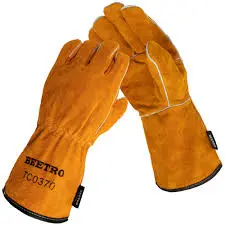
❌ 1. Why Standard Gloves Fail Miserably
Ordinary work gloves ignite at 700°F – a death trap in hot work environments. Gloves for hot work integrate physics-based defenses:
- Aerogel insulation blocks 90% conductive heat
- Aluminized outer shells reflect radiant heat
- Zirconia-embedded fabrics resist 3000°F sparks
Shocking Stat: 76% of hand burns occur from inadequate gloves (National Burn Repository).
🛡️ 2. EN407 Ratings Decoded
The EN407 standard evaluates six critical protections:
- A. Ignition Resistance (Scale 1-4)
- B. Contact Heat Resistance (1-4)
- C. Convective Heat Transfer (1-4)
- D. Radiant Heat Blocking (1-4)
- E. Molten Metal Splash Defense (1-4)
- F. Compression Resistance (Pass/Fail)
Pro Tip: Molten metal handlers need minimum E4 rating (tested against 35oz/1000°C copper splash).
✋ 3. Non-Negotiable Features
Premium gloves for hot work include:
- 18″+ Gauntlets sealing sparks from sleeves
- Double-Palm Construction (2.5mm leather + aramid)
- Steel Stitching outside hazard zones
- Silicone Grip Zones for tool control
- Moisture-Wicking Liners preventing steam burns
🧤 4. Material Battle: What Actually Works
Aluminized Kevlar®
- Max Temp: 2000°F intermittent exposure
- Best For: Welding, furnace repairs
- Weakness: Limited chemical resistance
Chamois Leather Hybrids
- Superior Flexibility: 92% dexterity retention
- Secret Weapon: Natural sweat absorption
- Maintenance: Bi-weekly conditioning required
Neoprene-Coated Glass Fabric
- Molten Metal Defense: Beads off splashes
- Critical Feature: Non-adhesive surface
- Warning: Degrades in UV within 6 months
🏭 5. Industry-Specific Selection Guide
Foundries/Metalcasting:
- Minimum EN407 E4 rating
- 22″ gauntlets (e.g., SteelArmor PRO Series)
- Replace after 200 work hours
Glass Manufacturing:
- Silicon carbide palm coating
- Inner cooling gel packs
- Mandatory daily inspections
Firefighting/Rescue:
- EN469:2020 certification
- Quick-donning design
- Hydrocarbon-resistant outer layer
⚠️ 6. Deadly Mistakes to Eliminate
Ignoring these voids your gloves for hot work protection:
- Sweat Contamination causing steam burns (↑300% injury risk)
- Chemical Degradation from solvents (silently weakens materials)
- Wrist Gap Exposure – gauntlets MUST seal with sleeves
🕵️ 7. The 90-Second Pre-Shift Inspection
- Flex Test: Bend fingers to check for cracks
- Pressure Check: Inflate to detect pinholes
- Surface Scan: Verify stitching integrity
- Thermal Check: Inspect inner liner separation
Red Flag: Glossy or stiff leather indicates dehydration failure
🔧 8. Lifespan-Tripling Maintenance
- Post-Shift Cleaning: Mild soap + lukewarm water
- Leather Conditioning: Lanolin every 72 work hours
- Storage Protocol: Hang vertically in breathable bags
Never: Use heat drying or petroleum-based cleaners
✅ 9. Compliance Checklist
Verify your gloves for hot work meet:
- ☑️ Current EN407/ANSI ISEA 105 certification
- ☑️ Permissible Exposure Limit documentation
- ☑️ Employee training on inspection protocols
- ☑️ Replacement schedule (max 240 work hours)
Need Custom Glove Solutions?
Contact Our Glove Specialists Today!
📞 Call for Immediate Sourcing:
Michael: +86 15165509509
Sophie: +86 15806930126
📩 Email Technical Specifications:
[email protected]
[email protected]
💬 Chat on social media:


Explore our [glove department] for professionally sized global glove options. Learn about [what are nitrile gloves] in our chemical protection guide.
