








The Critical Intersection of Safety, Compliance, and Hand Protection
Effective hand protection strategies are built on three interdependent principles: safety, compliance, and performance. Safety is the primary goal—to prevent injury from a wide spectrum of hazards including cuts, chemicals, extreme temperatures, and impacts. Compliance involves adhering to the legal and regulatory standards set by governing bodies like OSHA in the United States or the European Agency for Safety and Health at Work. These standards mandate that employers provide appropriate Personal Protective Equipment (PPE). Performance relates to the glove’s ability to allow the user to complete their task efficiently and comfortably, without undue fatigue or loss of dexterity. A deficiency in any one of these areas compromises the other two. For example, a highly protective but cumbersome glove may be compliant but could lead to poor performance and even be removed by the worker, thus negating its safety benefits. Therefore, a holistic approach that balances all three elements is essential for creating a truly effective safety culture.
The Foundation of Protection: An Analysis of Core Glove Materials
The material from which a glove is constructed is the single most important determinant of its protective capabilities. Each polymer or natural fiber offers a unique profile of strengths and weaknesses, making it suitable for a specific range of applications. Understanding these material properties is fundamental to glove selection.
Nitrile: The Synthetic Standard for Chemical Resistance and Durability
Nitrile Butadiene Rubber (NBR) is a synthetic polymer that has become a cornerstone of the modern glove industry. Its molecular structure provides superior resistance to chemical permeation and physical degradation compared to natural rubber.
- Chemical Robustness: Nitrile excels in environments where exposure to oils, solvents, greases, and certain acids is a concern. This makes nitrile work gloves an indispensable tool in automotive repair, manufacturing, and laboratory settings.
- Puncture and Abrasion Strength: The material is inherently tough, offering significantly more puncture resistance than latex. This is a critical feature for tasks involving sharp components, making heavy-duty nitrile gloves a reliable choice for demanding industrial work.
- Hypoallergenic Nature: As a synthetic, nitrile is completely free of the proteins that cause Type I latex allergies. This has made it the default material for medical gloves and food handling to protect both the wearer and the public.
The versatility of nitrile is showcased in products ranging from thin, disposable blue nitrile gloves for janitorial work to thick, reusable industrial green nitrile gloves for chemical handling.
Latex: Unmatched Dexterity and Tactile Sensitivity
Derived from natural rubber, latex gloves were the industry standard for decades, prized for their incredible elasticity and comfortable fit.
- Superior Fit and Feel: Latex conforms to the hand with remarkable precision, allowing for a high degree of tactile sensitivity. This makes it a preferred material for surgeons and other professionals who require fine motor control.
- Effective Biological Barrier: It provides a strong and reliable barrier against bacteria and viruses, making it suitable for biohazard protection.
- Cost-Effectiveness: For general-purpose applications, latex is often a highly economical option, as seen in many household cleaning gloves.
While the prevalence of latex allergies has led to a widespread shift toward nitrile in many sectors, latex remains an excellent choice for individuals without sensitivities who prioritize comfort and dexterity.
Leather: The Time-Honored Choice for Rugged Durability
For protection against serious mechanical and thermal hazards, leather remains a superior material. Its natural fibrous structure provides a level of toughness that is difficult to replicate with synthetic polymers.
- Exceptional Abrasion Resistance: The dense hide of animals like cows and goats provides outstanding protection against scraping and abrasion, making leather work gloves essential for construction, forestry, and metalworking.
- Natural Heat Resistance: Leather does not melt when exposed to sparks or brief moments of high heat, which is why it is the material of choice for all types of welding gloves.
- Durability and Form-Fitting Comfort: Well-crafted leather gloves are incredibly long-lasting and, with use, will mold to the specific shape of the wearer’s hand, offering a custom, comfortable fit for both men and women.
Advanced Polymer Coatings: PU and PVC
A significant portion of modern industrial gloves consists of a seamless knit liner coated with a protective polymer. This construction method combines the flexibility of a textile with the protective properties of a coating.
- Polyurethane (PU): PU-coated gloves are known for being extremely lightweight and offering a “bare-hand” level of dexterity and tactile sensitivity. They have a non-sticky finish and provide excellent grip in dry and slightly oily conditions, making them ideal for electronics assembly and general parts handling.
- Polyvinyl Chloride (PVC): A PVC coating is highly durable and provides excellent resistance to abrasion, acids, and caustics. Designs featuring PVC dots, such as PVC dotted gloves, offer enhanced grip for manual handling tasks.
Matching the Glove to the Hazard: A Risk-Based Selection Approach
An effective glove selection process is not based on preference, but on a systematic assessment of the specific hazards present in the work environment. Gloves are engineered to counter specific threats, and choosing the correct design is paramount.
Mechanical Hazards: Cuts, Punctures, and Impacts
This is the broadest category of workplace risk. Protection is achieved through high-performance materials and structural reinforcement.
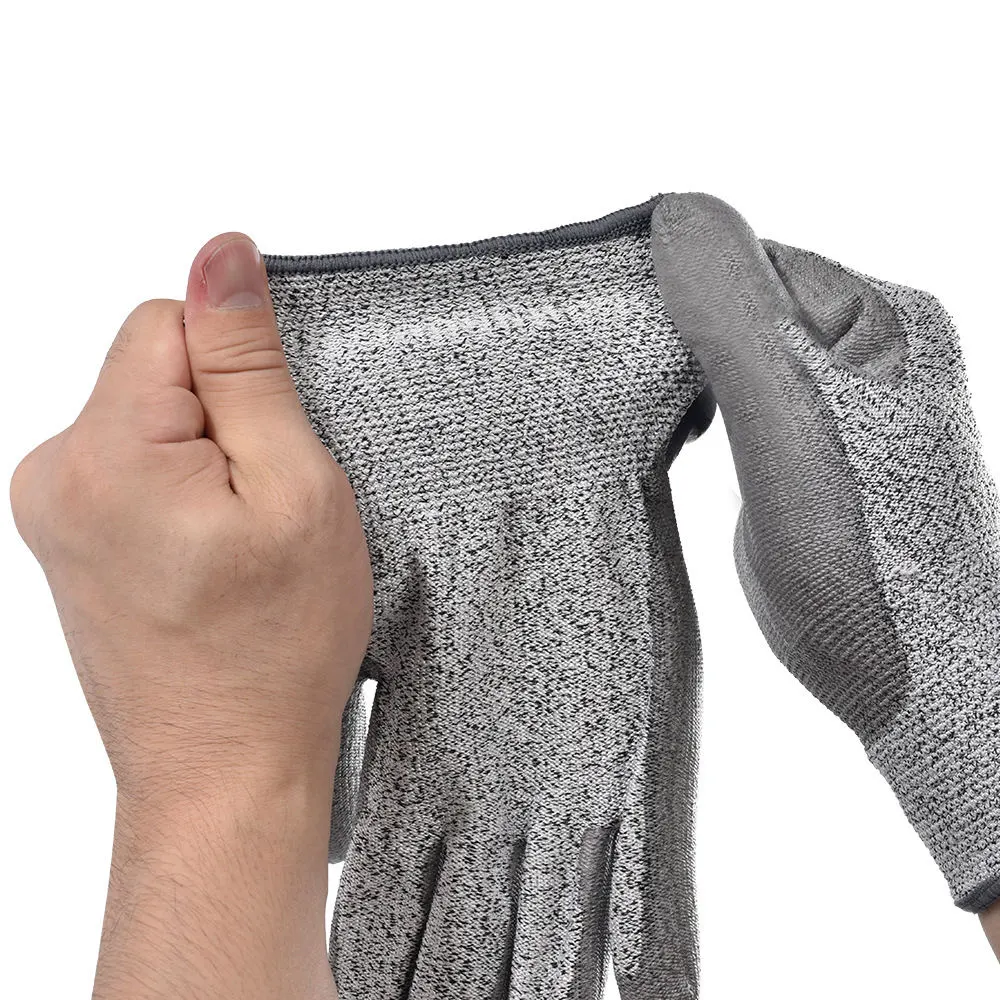
- Cut Resistance: Gloves designed to resist cuts are made from advanced yarns like HPPE, aramid, or steel fiber. Anti-cut gloves are rated according to EN 388 or ANSI standards, allowing users to select a specific level of protection, such as a Level 5 cut-resistant glove for high-risk tasks.
- Impact Resistance: To protect against crushing and impact injuries, impact-resistant gloves feature flexible Thermoplastic Rubber (TPR) pads on the back of the hand and fingers. These pads are strategically segmented to absorb and dissipate impact forces without overly restricting movement.
Thermal Hazards: Protection from Extreme Heat and Cold
Managing thermal risk requires materials that provide effective insulation.
- Heat Resistance: For welders and foundry workers, heat-resistant welding gloves made from thick split-grain leather and lined with wool or flame-retardant cotton are essential. They provide protection from sparks, spatter, and radiant heat.
- Cold Resistance: For work in cold environments, winter work gloves utilize multi-layer construction with thermal insulation like Thinsulate™. Many also incorporate a waterproof membrane to keep hands dry, which is critical for preventing heat loss. For extreme cold, heated gloves with battery-powered elements provide active warming.
Chemical Hazards
Chemical protection is highly specific; no single glove material protects against all chemicals. It is critical to consult a chemical resistance chart. For general resistance to oils and fuels, oil-resistant nitrile gloves are a common and effective choice. For handling aggressive acids or solvents, gloves made from butyl or Viton rubber may be required.
Electrical Hazards
Working on or near energized electrical equipment requires specially designed insulating gloves. These electrical gloves are made from dielectric rubber and are rated by class (00, 0, 1, 2, 3, 4) based on the voltage they can safely protect against. They must be visually inspected for any defects before each use, as even a pinhole can lead to catastrophic failure.
The Importance of Ergonomics and Fit for Performance and Safety
The most technologically advanced glove is useless if it is so uncomfortable that an employee refuses to wear it, or if it fits so poorly that it creates a new hazard.
The Dangers of an Improper Fit
A glove that is too large can reduce tactile feedback, cause the user to grip tools too tightly, and create a significant snag hazard around rotating machinery. A glove that is too small can restrict blood flow, cause cramping and fatigue, and may tear more easily under stress. This makes proper sizing a crucial safety issue.
How to Measure Glove Size Correctly
Achieving the right fit begins with an accurate measurement. The process is straightforward and is a vital piece of knowledge for any safety program. Following a guide on how to measure glove size is the first step:
- Using a flexible measuring tape, measure the circumference of the dominant hand around the knuckles, not including the thumb.
- This measurement, in inches, is the corresponding numerical glove size (e.g., 8 inches = Size 8).
- Consult the specific manufacturer’s sizing chart to convert this number into the appropriate letter size (S, M, L, XL), as this can vary between brands.
Demystifying Global Safety Standards: A Guide to Compliance
To ensure that gloves provide a reliable and quantifiable level of protection, international standards have been developed. Understanding these standards is essential for compliance and for making valid comparisons between products.
Understanding EN 388: The European Standard for Mechanical Risks
This is arguably the most common glove standard globally. A glove certified to EN 388 will be marked with a pictogram and a series of performance scores. The standard tests for:
- Abrasion Resistance (1-4): The number of cycles required to abrade through the material.
- Cut Resistance (Coup Test, 1-5): Resistance to a circular rotating blade. This test is less accurate for high-performance materials.
- Tear Resistance (1-4): The force required to tear the material.
- Puncture Resistance (1-4): The force required to puncture the material with a standard point.
- Cut Resistance (TDM-100 Test, A-F): A more precise test using a straight blade under variable force. This is now the primary indicator for cut protection.
Choosing an EN388 certified glove provides documented assurance of its mechanical performance.
Understanding ANSI/ISEA 105: The American Standard
The American National Standards Institute standard is prevalent in North America. It provides performance ratings for a wide range of hazards. Its most notable feature is the ANSI Cut Level scale, which uses a more granular nine-level system (A1-A9) to classify cut resistance. This allows for a very precise matching of glove protection to the specific cut risk of a task.
Specialized Gloves for Niche Applications and Demographics
The principles of hand protection extend to all areas of life, with specialized designs created for various activities and user groups.
For Hobbies and Recreation
Many leisure activities are made safer and more enjoyable with the right gloves. Gardening gloves protect against thorns and dirt, motorcycle gloves provide critical abrasion resistance for riders, and workout gloves prevent calluses and improve grip during weightlifting.
For the Next Generation: Kids’ Gloves
Instilling good safety habits starts early. A range of kid-sized gloves are available to protect smaller hands during activities. Whether it’s helping in the garden with kids gardening gloves or simply playing outdoors, these gloves ensure that children can participate safely.
Conclusion: Cultivating a Culture of Hand Safety Excellence
Hand protection is a complex but manageable field. Excellence in this area is achieved not by simply providing gloves, but by fostering a deep understanding of the risks, materials, and standards that define safety. The process begins with a rigorous hazard assessment and continues with the selection of a glove that meets the specific demands of the task in terms of protection, dexterity, and fit. It is reinforced by training and a commitment to adhering to global compliance standards. By treating glove selection as a critical technical decision, organizations and individuals can move beyond the simple concept of a barrier and embrace a comprehensive strategy that protects their most valuable asset—their hands—ensuring a safer and more productive future.
