





A carton can contain the correct number of gloves and still fail to provide the number of usable pairs that a buyer ordered. Two different sizes, two versions of a model or an incorrect left/right combination can be hidden inside an otherwise tidy package. Work glove pairing inspection addresses that specific purchasing risk.
This guide is for distributors, importers and receiving teams checking paired, coated work gloves. It sets out a practical identity-and-packaging review, not a protection test or a statistical inspection standard. Agree the inspection scope and acceptance rules with the supplier before shipment.
Define what counts as one complete pair
Start with the actual glove design. Where a model has designated left and right hands, the saleable unit should contain the required combination. Where a design is genuinely ambidextrous, apply its agreed pairing specification instead. Do not assume every knitted glove is interchangeable between hands, and do not reject an ambidextrous design simply because it lacks left/right markings.
Write the model, construction revision, size, color, coating option and unit quantity into the order record. State whether the inner package contains individual pairs or multiple pairs and how each size is separated. A label that says only “work gloves” gives the receiving team too little information to distinguish an approved variant from a similar substitute.
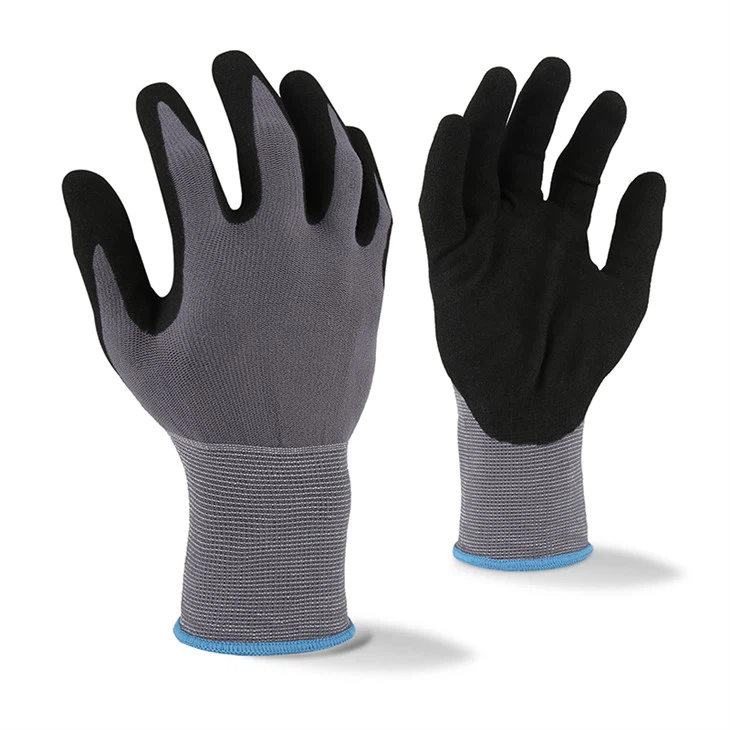
For Rilong’s 15-gauge sandy nitrile work glove, confirm the exact liner blend and palm or full-coating configuration first. The product listing includes alternatives; those alternatives should not be mixed within a pair unless the buyer has explicitly ordered an unusual, documented arrangement. Gauge and coating names are construction details, not evidence of a protection level.
Check three layers of identity together
A pair should be checked against its immediate packaging and the order reference, not assessed in isolation. A correctly printed outer carton cannot establish that every inner pack contains the right model or size. Likewise, matching cuff labels do not resolve a visible construction difference between the two gloves.
Glove-to-glove checks
- Both gloves belong to the ordered model and approved construction revision.
- Both carry the intended size identification, where marking is part of the specification.
- The left/right combination matches the design, where applicable.
- Liner color, cuff construction and coating option correspond to the approved reference.
- Neither glove appears to have been substituted from another variant.
Pair-to-package checks
Compare the pair with the band, bag, card or other packaging used for that unit. Check the printed model and size, the quantity description and any barcode or stock code required by the buyer. Keep the association intact until the review is recorded. Removing every band before checking the markings can make it difficult to identify where a mismatch arose.
Package-to-order checks
Confirm the inner pack and carton agree with the purchase order’s model and size allocation. Separate the question “Is this pair correct?” from “Is this carton assigned to the right size?” Both matter, but they lead to different corrective actions. Record the carton identifier so the supplier can investigate the relevant packing records.
Use a repeatable receiving sequence
Agree how samples will be selected across the shipment, including the relevant sizes and packaging configurations. A buyer may need a formal inspection plan, but there is no universal sample quantity implied by this article. Do not turn a convenient desk check of one pair into a claim that the entire lot has passed inspection.
- Record the order, delivery, carton and selected inner-pack identifiers before opening.
- Read and photograph the package label with the selected pair still associated with it.
- Lay the gloves out in a consistent orientation so the palm, back and cuff can be compared.
- Check the glove-to-glove identity fields and the required handedness combination.
- Compare the pair and package against the approved specification and reference sample.
- Log the result and preserve the traceability of any item held for review.
A consistent layout helps avoid false alarms. Two photographs showing different sides can make matching gloves look different. Compare palm with palm and back with back before recording a discrepancy. If the design uses asymmetric features, ask the supplier to explain them using the approved model reference rather than guessing from a catalog photograph.
Separate size identity from dimensional consistency
Matching size labels are necessary where specified, but they are not the entire check. If the gloves appear noticeably different in length or width, compare them using the measurement method and tolerances already agreed with the supplier. Record whether the item was laid flat, stretched or measured another way. An unexplained dimension is difficult to reproduce.
Do not invent a millimeter tolerance after the goods arrive. If no dimensional limits were agreed, record the observation and request clarification before treating it as an established contractual failure. The same principle applies to small differences in coating boundaries or cuff appearance: use an approved requirement, not an undocumented impression.
Pairing inspection is also separate from wearer fit approval. A perfectly matched pair can still be the wrong size for a worker. Use the 15-gauge sandy nitrile sample and RFQ checklist to establish the model and sample-review baseline before this receiving check is needed.
Document a mismatch without losing its source
When a discrepancy is found, identify the pair and retain its packaging together. Photograph the two gloves, their markings and the package label, then include the carton reference in the report. Describe exactly what differs: for example, different size markings, a repeated hand for a handed design, or two coating options within one package. These are illustrative categories, not findings about a Rilong shipment.
Keep quantity records unambiguous. State whether the affected quantity is counted in individual gloves, pairs, inner packs or cartons. Do not convert an observed mismatched pair into an assumed number of defective cartons. Ask the supplier to establish the possible scope and the proposed review or sorting method.
A compact exception log can contain the order reference, carton identifier, model, expected size and construction, observed difference, photograph references, quantity unit, stock location and decision owner. Mark unresolved entries as pending instead of recording a pass simply to close the receiving paperwork.
Agree rework and release before stock is redistributed
Do not silently rebuild pairs from different cartons and discard the original labels. That can obscure model identity and traceability. If sorting or repacking is agreed, document the authorized scope, who performs the work, how the corrected units are rechecked and how their relationship to the original shipment will be retained.
Where a mismatch suggests a wider identification problem, the appropriate reviewer should decide what stock remains on hold. Purchasing staff should not infer that two similar-looking gloves have equivalent protection or that a labeling error is purely cosmetic. Refer unresolved model or performance questions to the supplier and the responsible safety team.
Conclusion: count usable, identified pairs
Reliable work glove pairing inspection connects the two gloves, their packaging and the order specification. It checks handedness where applicable, consistent size and construction, and a clear record of exceptions. It complements sample approval and protection-document review; it cannot replace either.
For a quotation on the 15-gauge sandy nitrile model, send Rilong your pairing and packaging requirements, requested sizes, coating option and target market. Ask the team to confirm the current model specification, label arrangement and inspection expectations before the order is finalized.
