



Work glove thumb-web wear can be easy to miss during a quick sample review. Buyers check the palm, fingertips and printed markings, yet the area between the thumb and index finger receives less attention. When a user holds a handle or repeatedly repositions a component, this small area may become a recurring contact point. A purchase decision should therefore examine the whole gripping shape, not only a flat palm photograph.
This guide provides a practical purchasing workflow for importers, distributors and safety teams. It explains how to describe this area, compare an ordinary coated construction with a proposed reinforcement, and record observations without turning a workplace trial into an unsupported protection claim. The checklist is a buyer’s proposed evaluation method, not a laboratory test or a guarantee of service life.
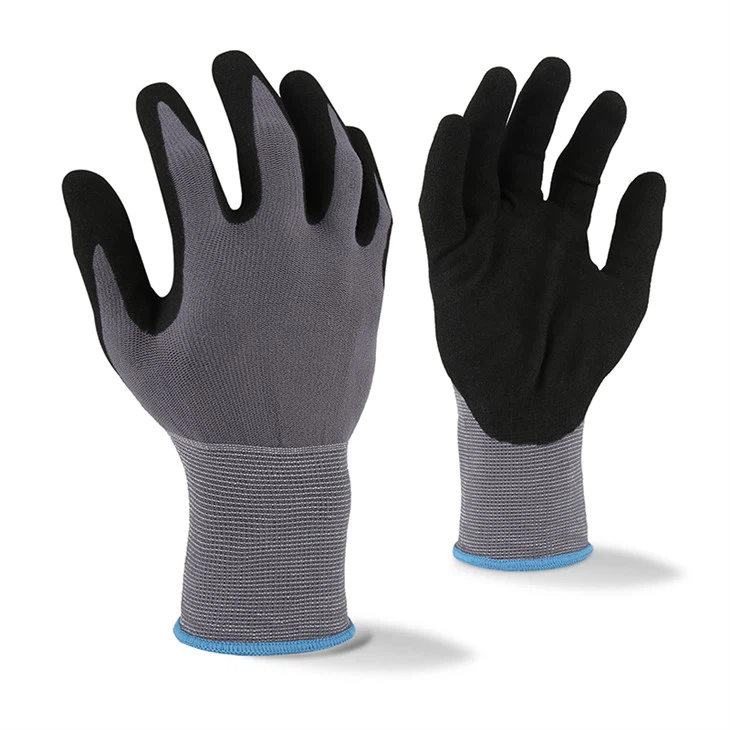
Define the Thumb-Web Area Before Comparing Samples
The thumb web, sometimes called the thumb crotch, is the junction between the thumb and index finger. Use a marked photograph to identify the intended inspection area. Otherwise, a buyer may mean a palm-side patch while a supplier understands extra coating across the back of the junction. Those are different constructions and should not be accepted as interchangeable descriptions.
Ask the supplier to identify the liner, coating boundary and any additional material in that exact location. Request palm, back and side views with the thumb gently opened. If reinforcement is offered, ask whether it is an added layer, a separate patch or another construction. Record the actual answer rather than inferring it from a darker color or a thicker-looking image.
Separate Fit Problems From Material Wear
Check the hand inside the glove
A sample that looks satisfactory when empty may feel restrictive when the thumb opens around a handle. Check that the web sits comfortably without pulling the fingertips back or forcing the wearer to keep adjusting the glove. Conversely, excess material may bunch at the gripping point. Compare adjacent sizes where necessary; do not solve every fit complaint by automatically selecting a larger size.
HSE’s glove-selection guidance emphasizes the work, wearer and environment, including fit and the balance between protection and dexterity. Apply that principle when assessing the thumb junction. A reinforcement that feels acceptable during a short fitting should still be evaluated in the intended handling task.
Identify the contact pattern
Before blaming the coating, record what actually touches the glove: a smooth handle, a rough component, a strap or another surface. Note whether contact is sliding, pinching or sustained holding. Compare left and right hands separately. Repeated damage in one location is useful information, but it does not by itself prove a manufacturing defect or reveal the cause.
Use Product Pages as Starting Points, Not Complete Specifications
For Rilong’s 15-gauge sandy nitrile palm-coated work gloves, make the selected liner blend and coating configuration explicit in the sample request. The listing includes configuration choices, so a quotation should identify the version actually supplied. Ask for a close-up of the thumb junction on that version and confirmation of whether any separate reinforcement is present. Do not assume reinforcement from the sandy finish.
For the Level 5 PU-coated cut-resistant work glove listing, inspect the same area for fit and coverage while requesting current model-specific evidence for the stated cut claim. The listing label is not proof that an additional thumb patch is included or that a particular task is suitable. Keep construction questions separate from the verification of protective performance.
A Sample Review Checklist for the Thumb Junction
Keep an unused reference pair available and label each trial pair with the model, size and sample identifier. The following checks help make supplier discussions concrete:
- Coverage: mark where the coating stops around the thumb and index finger; compare both gloves and the agreed reference.
- Surface condition: record visible gaps, loose material, uneven edges or local lifting before use, without assigning a cause prematurely.
- Movement: check ordinary opening, closing and safe gripping motions for pulling, bunching or an uncomfortable edge.
- Added construction: identify patch material, attachment method and placement if a reinforced version is proposed.
- Konsistenz: compare more than one supplied pair and each requested size; a single attractive sample cannot demonstrate a whole shipment.
- Evidence: photograph the same views before and after a controlled trial, using the same identification and lighting where practicable.
For broader receiving checks, use the related coated work glove incoming-inspection guide. This thumb-web review adds a focused location check; it does not replace the overall inspection plan or agreed acceptance criteria.
Compare Reinforced and Standard Versions Fairly
Request samples of both versions in comparable sizes and clearly identify every construction difference. If the reinforced sample also changes liner, coating, fit or palm coverage, record those changes. Otherwise, a buyer may attribute an improvement to the patch when several variables changed together.
A useful comparison form includes model code, size, liner description, coating configuration, reinforcement description, task, wearer feedback and observed condition. Set the review interval before starting and use the same recording method for each version. The appropriate interval depends on the task and site controls; this article does not prescribe a universal number of hours or cycles.
Do not assume more material is always better. Ask users to report any change in handle feel, ability to release an object, fingertip positioning or comfort. A proposed durability improvement should be considered alongside usability and the protection requirements established for the task, rather than treated as an automatic upgrade.
Keep Workplace Trials Safe and Claims Limited
Use a trial approved by the responsible site team, within the glove’s documented intended use. Do not deliberately expose hands to sharp edges, moving machinery or other hazards to demonstrate wear resistance. Never use knife demonstrations or intentional damage while the glove is being worn as a substitute for appropriate testing and risk assessment.
Record observations such as “local surface wear visible after the agreed review period” rather than “twice the abrasion resistance” unless a suitable comparison actually supports that statement. Workplace observations help a buyer choose and monitor a construction, but they do not generate an EN rating or establish resistance to a different hazard. Stop using damaged or unsuitable gloves according to the site’s procedures and manufacturer instructions.
What to Put in the RFQ and Purchase Record
Translate the sample discussion into a version-controlled description before ordering. A practical RFQ should ask the supplier to confirm:
- The exact model and size range, with liner and coating configuration identified.
- Whether thumb-web reinforcement is included, optional or unavailable for that version.
- The location, material and attachment details of any proposed reinforcement, supported by labeled photographs or a drawing.
- The approved sample identifier and agreed method for comparing production with that sample.
- The relevant model-specific documentation, limitations and care instructions.
- The current quotation, minimum order, packing and production schedule for the selected construction, confirmed in writing rather than assumed.
Avoid vague wording such as “extra strong thumb” as the only requirement. Define the observable construction and review process. If the supplier proposes a substitute material or a changed patch shape later, require review before treating it as the approved version. Do not invent dimensional tolerances merely to complete a form; agree meaningful measurements with the supplier.
Turn Wear Feedback Into a Better Reorder
When feedback arrives, retain the model, batch, size, task description and before-and-after photographs together. Ask whether wear appeared in unused stock, during the first trial or only after extended service. Keep complaints from different constructions separate. This makes it easier to discuss a fit adjustment, a construction change or a different glove without making a premature diagnosis.
The purchasing goal is not simply a thicker thumb area. It is a documented construction that fits the intended users, remains usable in the approved task and has appropriate evidence for its claimed protection. Contact Rilong to discuss samples and thumb-web construction, sharing your task, required sizes, photographs of the contact area and the documentation you need. Confirm the available version and commercial terms before approving a bulk order.
